
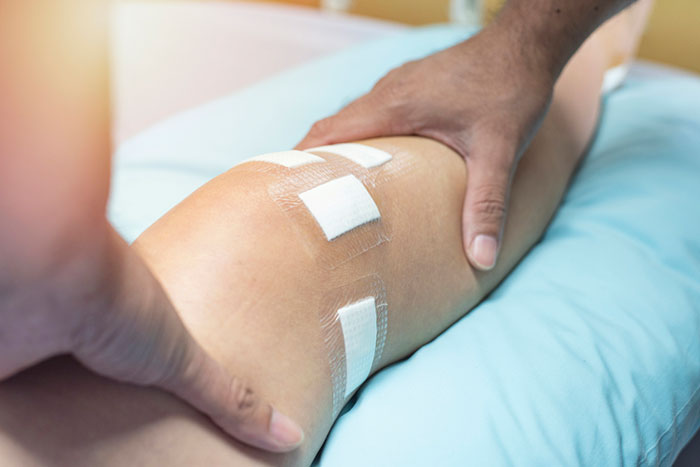
Having surgery can feel like the hard part is over. Then you get home and realise there is still plenty of work ahead. Your body needs time to heal, but you also need to rebuild strength, movement and confidence before you can get back to normal.
That is where post-operative rehabilitation becomes vital.
Physiotherapy after surgery is about knowing what your body can handle at each stage, gradually increasing the workload and avoiding setbacks along the way.
Your First Physiotherapy Appointment
Your first appointment will depend on the type of surgery you’ve had and how far along you are in your recovery.
Your physiotherapist will ask about the operation, how you’ve been feeling since surgery and what you’d like to get back to doing. They may look at your movement, strength, swelling, pain and how you manage everyday activities.
They’ll also take your surgeon’s instructions into account, particularly if you have restrictions around weight-bearing or certain movements.
Don’t expect an intense workout straight away. In the early stages, the priority is often getting comfortable with basic movement and making sure you’re using the affected area correctly.
Your Rehabilitation Will Change as You Recover
You won’t be doing the same exercises from week one through to the end of your recovery.
Early on, you might be working on reducing swelling, maintaining joint movement or getting certain muscles working again. As your body heals, the focus shifts towards strength, balance, coordination and everyday function.
Take knee surgery as an example. Early exercises might involve gentle knee movement and basic muscle activation. Later, you may work on squats, step-ups and resistance exercises. Eventually, if you’re returning to sport, your program might include running, jumping or changing direction.
Expect Some Good Days and Some Bad Ones
Recovery rarely moves in a perfectly straight line. You might have a week where everything seems to be improving, followed by a day when the area feels stiff or sore after doing a little more than usual. That doesn’t automatically mean something has gone wrong.
Your physiotherapist can help you work out what is normal and when you’ve simply done too much. This is important because it’s easy to get impatient when you’re feeling better and start increasing your activity faster than your body is ready for.
The aim is consistent progress without repeatedly aggravating the area you’re trying to recover.
Your Exercises Should Have a Purpose
A good rehabilitation program isn’t a collection of random exercises.
Your physiotherapist should be able to explain why you’re doing something and how it relates to what you want to achieve.
If you need to return to work, your exercises may eventually reflect the lifting, standing or movement your job requires. If you want to get back to running, the program will need to progress towards the demands of running.
As you improve, exercises should become more challenging in a controlled way.
What You Do Between Appointments Matters
Physiotherapy appointments are only one part of the recovery process.
Your exercises at home are where a lot of the work happens. You might see your physiotherapist once or twice a week, but your body is adapting to movement and exercise between those appointments.
That doesn’t mean you need to spend hours exercising every day. Your program should be realistic enough to fit around your normal routine, while still giving you enough work to make progress.
If an exercise is difficult to understand or isn’t working for you, tell your physiotherapist. It’s much easier to adjust the program than to quietly stop doing it.
How Long Does Post-Operative Rehabilitation Take?
This depends heavily on the surgery and the person recovering from it.
A straightforward procedure and a major joint reconstruction obviously won’t have the same timeline. Your age, fitness, the condition of the area before surgery and what you want to return to can all make a difference.
Your recovery may also take longer than someone else’s even if you’ve had the same procedure. That’s not necessarily a problem. Your physiotherapist can track your progress and adjust your program as you go, rather than relying entirely on a fixed timeline.
Getting the Right Support After Surgery
The right rehabilitation plan should be based on your surgery, your current abilities and what you need to get back to doing.
At Freedom Physiotherapy, our team provides post-operative rehabilitation Bentley patients can use to rebuild movement and strength following surgery. We’ll work with you through the different stages of recovery, adjusting your program as your body responds.
As a local physiotherapy clinic Bentley patients can access for ongoing care, we’re here to help you understand what you’re working towards and what you can do between appointments to keep moving forward.
Book an appointment with us online now or call 08 6252 0597.